

ADHD: Symptoms, Diagnosis, and Treatment
It's the night before school, and everything goes perfectly. Homework's done, chores are finished, clothes are laid out. You picture a calm goodbye at the door, a gentle breeze, the sound of bells in the distance. Then you wake up. It's 7:00 AM, it's Monday, and the real morning has already begun — "Get up! We're late!" — followed by the familiar scramble, and somewhere in the chaos: "Why didn't you tell me your report was due today?"
If mornings like this feel less like the exception and more like the rule, you may find yourself wondering whether something more is going on. Children who have difficulty finishing tasks, who are easily distracted, who fidget or squirm, talk excessively, seem not to be listening, are frequently forgetful, interrupt others, or show a greater-than-average amount of body movement may be showing signs of Attention-Deficit/Hyperactivity Disorder (ADHD).
What Is ADHD?
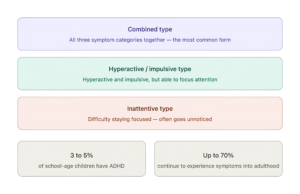
ADHD is one of the most common neurodevelopmental conditions in childhood, affecting roughly 3% to 5% of school-age children. It has a strong genetic link — if a child in the family has ADHD, there's a good chance at least one parent experiences it as well. Up to 70% of children with ADHD continue to experience symptoms into adulthood, which is why it's worth understanding even beyond the school years.
Signs and Symptoms of ADHD
Common signs include:
- Difficulty finishing tasks
- Being easily distracted
- Fidgeting or squirming
- Talking excessively
- Appearing not to listen
- Frequent forgetfulness
- Interrupting others
- A greater-than-average amount of body movement
The Three Subtypes of ADHD
ADHD isn't one-size-fits-all. There are three recognized subtypes:
- Combined Type (Inattentive/Hyperactive/Impulsive): children experience all three symptom categories together. This is the most common form of ADHD.
- Hyperactive/Impulsive Type: children show hyperactive and impulsive behavior but are able to focus their attention when needed.
- Inattentive Type: once known as attention deficit disorder (ADD), these children aren't impulsive or hyperactive, but have significant difficulty staying focused and on task. Because they aren't disruptive, this subtype frequently goes unnoticed.
What Causes ADHD?
ADHD has a strong genetic component, but environment plays a role too — especially in younger children. It's very difficult to accurately diagnose ADHD before age 6, since what looks like ADHD in a young child is often the result of environmental factors at home, such as lack of structure or a poor diet. Once those factors are addressed, ADHD-like behaviors frequently clear up on their own.
How ADHD Is Diagnosed
ADHD in a child can be diagnosed by a psychiatrist, child psychologist, or other licensed mental health professional. Generally, a child needs to show six or more specific symptoms on a regular basis over a period of six months or longer. While recent developments have explored using brain imaging to identify differences between children with and without ADHD, diagnosis is still made most commonly through behavioral observation by a qualified professional.
When ADHD Becomes Noticeable
ADHD often becomes especially apparent around fourth grade, when school places greater emphasis on working independently and sitting quietly at a desk — a genuinely difficult task for a child with ADHD, regardless of how hard they're trying.
Treatment Options for ADHD
ADHD is most commonly, and effectively, treated with a combination of stimulant medication, educational programs, and behavioral interventions. Commonly used stimulant medications include Ritalin, Adderall, and Concerta, designed to help a child with ADHD ignore distractions and stay focused on the task in front of them.
A newer, non-stimulant medication called Strattera has also entered the market; its long-term effectiveness isn't as fully established yet, though early results have been promising. All medications carry the possibility of side effects, so it's important to discuss those risks directly with your child's physician.
People with ADHD tend to benefit greatly from structure and routine. They often struggle more than others with following established rules, which can put them at odds with parents, teachers, and peers — not out of defiance, but because the skills required don't come as naturally to them.
The Impact of Untreated ADHD
Accurate diagnosis and treatment matter. Children with ADHD frequently bear the brunt of teasing at school, and their impulsivity can draw negative attention from classmates, teachers, and other authority figures. Left unaddressed, this can affect a child's social and emotional development and cause them to lag behind peers their own age. Children with ADHD also have a higher incidence of learning disabilities and conduct disorders, and are at significantly greater risk of anxiety and depression than the general population — which is exactly why early diagnosis and treatment matter so much for a child's overall well-being.
ADHD Can Also Be a Strength
Once ADHD symptoms are understood and treated, the natural energy, creativity, and drive that come with it can become real strengths rather than obstacles. Ansel Adams, George Burns, Jim Carrey, Cher, Bill Cosby, Walt Disney, Albert Einstein, and John F. Kennedy have all been said, according to ADHDrelief.com, to show traits associated with ADHD — a reminder that with the right support, this isn't a limitation on what a child can become.
Getting Help for Your Child — or Yourself
If you suspect your child might have ADHD, please seek out a psychiatrist, child psychologist, or other qualified licensed professional in your area for an accurate diagnosis and treatment plan. If your child has already been diagnosed, it's worth speaking with their school counselor about resources and programs that may be available through the school. CHADD.org is also a strong resource for parents looking for current information and support.
And if you're an adult who's continued to notice ADHD-like patterns — difficulty focusing, restlessness, trouble following through — into your own life, you're not alone; as many as 70% of children with ADHD carry symptoms into adulthood. If those patterns are affecting your work, relationships, or day-to-day life, individual therapy can be a good place to start working through it.
Frequently Asked Questions
Is ADHD hereditary? Yes, ADHD has a strong genetic link. If a child in the family has ADHD, there's a good chance at least one parent experiences it as well.
At what age can ADHD be accurately diagnosed? It's very difficult to diagnose ADHD reliably before age 6. In younger children, symptoms that resemble ADHD are often related to environmental factors like lack of structure or diet, which frequently resolve once those factors are addressed.
What are the three types of ADHD? The three subtypes are Combined Type (inattentive, hyperactive, and impulsive symptoms together), Hyperactive/Impulsive Type, and Inattentive Type (previously known as ADD).
Does ADHD go away in adulthood? Not usually. Up to 70% of children with ADHD continue to experience symptoms into adulthood, even if the presentation shifts over time.
Is medication the only treatment option for ADHD? No. While stimulant medications like Ritalin, Adderall, and Concerta are commonly used, effective treatment typically also includes educational programs and behavioral interventions. Your child's physician can help determine the right combination for your family.
Why does ADHD often become more noticeable around fourth grade? Around fourth grade, school expectations shift toward more independent work and sitting quietly at a desk for longer stretches — tasks that are genuinely more difficult for a child with ADHD, which can make symptoms more visible to teachers and parents alike.
Can undiagnosed ADHD contribute to anxiety or depression? Yes. Children with ADHD are at significantly greater risk of anxiety and depression than the general population, which is part of why early diagnosis and treatment are so important.
Where should I start if I think my child has ADHD? Start with a psychiatrist, child psychologist, or other licensed mental health professional for an accurate diagnosis. If your child is already diagnosed, your school counselor and organizations like CHADD.org can help connect you with additional resources and support.
Can adults be treated for ADHD symptoms too? Yes. If ADHD-like patterns from childhood have continued into your adult life and are affecting your work, relationships, or daily functioning, individual therapy can help you build strategies to manage them.
The goal of understanding ADHD is simple: help you recognize the signs early, so your child — or you — can get the right support to thrive, not just cope.
Call today to set up a free consultation for more information on
ADHD Counseling in Los Angeles
818-753-4865